________ Newsletter ________ |
|
|
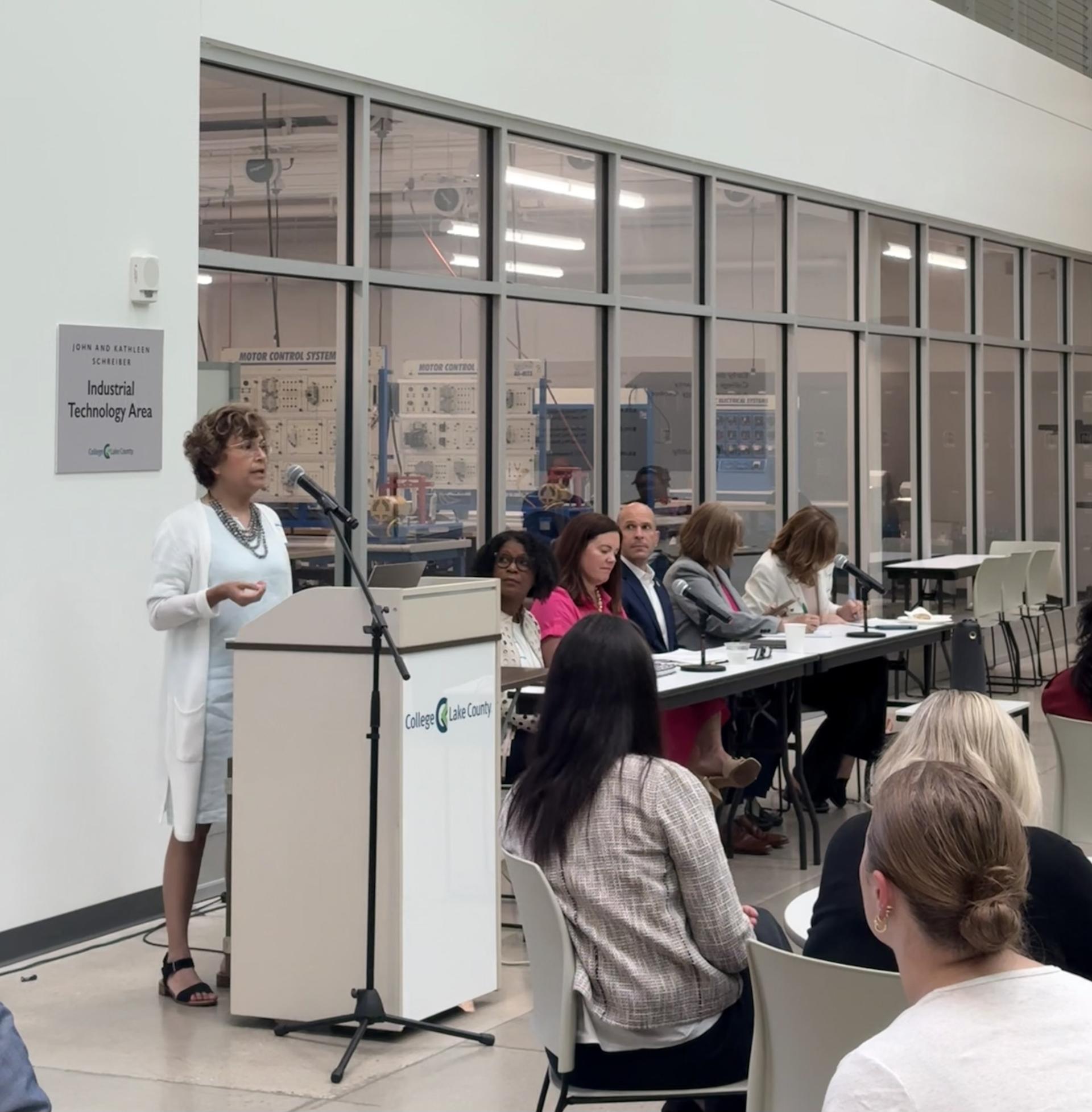
Alicia Garcia, Director of Programs at HACES and Board Chair of The Alliance for Human Services. |
|
|
Stronger Together: Collaborating for a Better Future in Human Services |
|
|
In July, HACES staff attended a legislative forum hosted by The Alliance for Human Services, bringing together a panel of local legislators and the Lake County Board Chair to discuss the future of human services in our community. The forum highlighted the critical role that advocacy and support services play in ensuring that all residents, including immigrant and refugee families, have access to the resources they need.
As part of the discussion, panelists shared their perspectives on current challenges facing human services organizations while reaffirming the importance of collaboration between community members, service providers, and policymakers. The panel also addressed the challenges posed by the One Big Beautiful Bill Act (OBBA). Several expressed their intent to pursue state-level measures to protect individuals and families from some of the harmful consequences outlined in the bill. (Learn more about some of these consequences faced by our community members in the article below).
"In times of uncertainty, human service organizations are a lifeline for families navigating complex systems. It’s inspiring to be part of a community, through the Alliance for Human Services, that’s working together to make sure everyone, including immigrant and refugee families, can get the support they need. At HACES, we’re proud to be part of the solution." - Alicia Garcia, Director of Programs at HACES
HACES looks forward to continued collaboration and is proud to stand alongside our partners in advocating for policies which strengthen access to human services to all. |
|
|
Visit our Know Your Rights Page |
| |
|
Care in Action: Staying Informed |
Protect yourself, protect your loved ones. |
One Big "Beautiful" Bill and Its Many Ugly Costs |
The recent passage of the “One Big Beautiful Bill Act” (OBBA) introduced sweeping changes to immigration, human services, and federal spending. For many immigrants, including those with legal status, these changes carry harsh and immediate consequences. The following is a breakdown of just a few key costs and impacts faced by our community. |
Enforcement and Deportation |
The bill offers a massive investment towards immigration enforcement, splitting $170 billion between the U.S. Immigration and Customs Enforcement (ICE), detention centers, and southern border wall enforcement. The bill also supports the following measures: -
Expanded expedited removal: Undocumented individuals risk deportation without full court hearings.
- Due process safeguards: Limitations on continuances, hearings, and legal protections.
- Targeting of sanctuary jurisdictions: Federal funding may be withheld, and local law enforcement can be compelled to cooperate with ICE.
|
Immigration-related applicants will be experiencing sharp fee increases as early as this summer, placing financial strain on individuals and families. Additionally, mixed-status families may be excluded from claiming the Child Tax Credit (CTC). - Asylum Applications: $100 asylum fee, $550 initial work authorization fee, and $275 for renewal of that authorization. OBBA also establishes an annual $100 pending application fee. *Note that some applicants have waited up to 10 years for a decision.
-
Humanitarian Parole: $1,000 parole application fee, $550 initial work authorization fee, and $275 for renewal of that authorization.
- Immigration Court Proceedings: New fees in place for applications, motions, and appeals in immigration court proceedings.
|
Remittances and Child Tax Credit |
For many U.S. workers, the remittances they send to family abroad encourage improved well-being and economic growth, a new tax may affect that. One in four children in the U.S. have an immigrant parent, and many U.S. citizen children have a parent who lacks a Social Security Number. -
Remittance Tax: A new 1% excise tax on international cash and money orders. This tax would impact overseas family members of individuals in the U.S.
- Tax Credit Restrictions: Social security numbers will be required for the Child Tax Credit, making 4.5 million children ineligible, a vast majority of them being U.S. citizens.
|
Medicaid and SNAP Assistance |
Public benefits make nutrition and healthcare more accessible to low-income individuals and families, however, there are legal status requirements in place. This makes most undocumented individuals ineligible. -
Medicaid Children's Health Insurance Program (CHIP): Prohibition of federal financial participation for non-citizens or qualified immigrants.
- SNAP/Food Assistance: Elimination of food assistance to designated qualified immigrants, only citizens and lawful permanent residents can be eligible.
HACES will continue to review these changes and ensure that our community and service-seekers are accurately informed. If you have any questions about a case or application being affected by these developments, please contact us at (847) 244-0300. |
|
|
Thank You Sponsors and Community Partners! |
| |
Our Contact Information
*{{Organization Name}}*
*{{Organization Address}}*
*{{Organization Phone}}*
*{{Organization Website}}*
*{{Unsubscribe}}*
|
|
|
|
|